- Firebug is cool
- Python is ubercool
- <!DOCTYPE html "-//W3C//DTD XHTML 1.0 Strict//EN" "http://www.w3.org/TR/xhtml1/DTD/xhtml1-strict.dtd"> is NOT just a nice comment that keeps validators happy.
Friday, September 28, 2007
learning new tricks
Last Thursday's lessons:

Saturday, September 22, 2007
Fun facts vol.1
Last Thursday I noticed for the first time that when you drag a map in Google Maps, the scale in the lower-left corner changes, though the zoom level is the same. That's perfectly natural with the Mercator projection, but still comes as a surprise when you see it for the first time – after all, the static paper maps don't do that. Moreover, if you zoom out to the furthest zoom level you still see the scale, but it doesn't make sense! You obviously can't apply it to the whole map if you don't want Greenland to be bigger than North America.
Another funny thing was a question for the Russians who learn English: how do you translate the names of the rainbow colors? It has stumped everyone so far: we all know the seven rainbow colors in Russian, but the colors #5 and 6 (голубой and синий) are both usually translated as blue. I even thought that maybe in English-speaking countries the rainbow is quantized into 6 colors, but wikipedia clarified that these two are actually blue and indigo. It feels quite stupid: you definitely don't know the language if you can't even name the rainbow colors.
Another funny thing was a question for the Russians who learn English: how do you translate the names of the rainbow colors? It has stumped everyone so far: we all know the seven rainbow colors in Russian, but the colors #5 and 6 (голубой and синий) are both usually translated as blue. I even thought that maybe in English-speaking countries the rainbow is quantized into 6 colors, but wikipedia clarified that these two are actually blue and indigo. It feels quite stupid: you definitely don't know the language if you can't even name the rainbow colors.
Sunday, September 16, 2007
Honeymoon
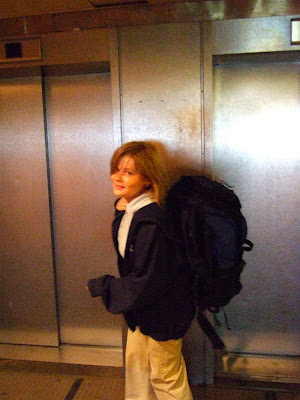
Leaving SVO
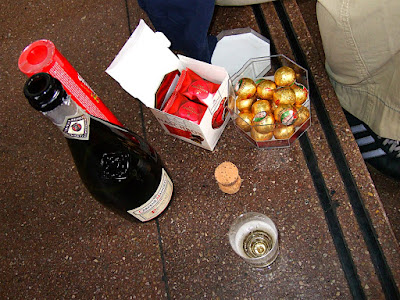
13-hour flight was going to be exhausting, so we had lunch in a nice hidden restaurant at the airport and finished one bottle of wedding champagne before boarding.
In Havana we went straight to Prado 20 – a modern building with numerous casas. We were lucky enough to find a nice room for a night and have a nice chat with the casa owners who warned us against pickpockets, convinced us that generally Cuba is a very safe place and provided some general guidance about what to do next. The funny part was "You'll meet all sorts of people in the streets who will try to sell you stuff like cigars at very low prices. Don't trust them – their goods are likely to be fake. By the way, my brother works on a cigar factory, so if you want some really cheap cigars, I can give you the price list". It really looked like a "Did you hear what I just told you?" test, but we bought a half of our cigars from that guy eventually.
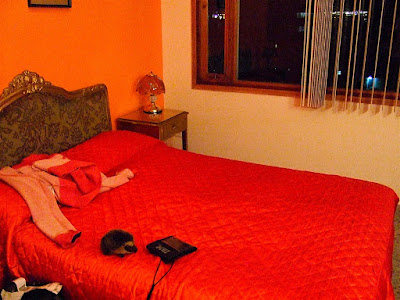
Bed #1
It was quite late, but we were really hungry. So we went out into the night to get some food.
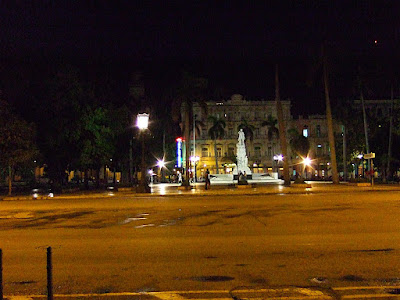
Parque Central
Cuban people are really friendly and social, so we weren't surprised when some policeman decided to chat with us on our way back to the casa. After some usual stuff like "Where are you from? What's your name? Oh, you're on a honeymoon!", shaking hands, hugging etc. he told us that it was his birthday, so he definitely needed a present. We were out of small coins, so we gave him a can of coke and went back home. There we found out that while hugging he stole… everything Yulia had in her pockets, which was luckily only a couple of cigarettes and a lighter. So the lesson was learned cheap – it was the last time we had any problems with pickpockets on Cuba.
By the way, the next day we found out that his military uniform had nothing to do with police, so it wasn't that bad after all – the real policemen don't even try to talk to you unless you ask them to.

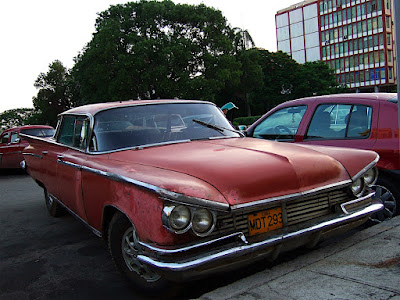
Havana is a very impressive place. It makes you think about sci-fi novels featuring a great civilization which mysteriously disappeared and left numerous artifacts to some lesser civilization that has no idea how do these artifacts work and what do they actually do. Many Cuban cities look really post-apocalyptic: they have amazing Spanish colonial architecture, all these arcades, patios, columns and balconies, but the houses are half-ruined and nobody does anything about it. The wall collapsed – well, who cares, it's warm enough here anyway. Same applies to vehicles: they're either old Soviet cars or antique American ones, the only exceptions are taxi, car rentals and ambulance. Old Canadian school buses are used as a public transport in Havana – and that's good, most of the country uses trucks and horse carriages.
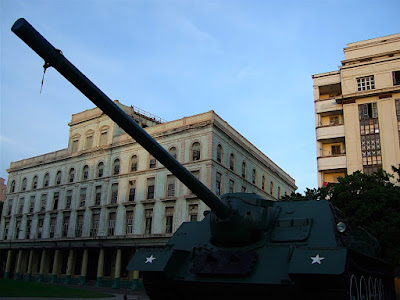
There's a lot of propaganda on the streets: all sorts of "Patria o muerte" billboards, wall graffiti, Fidel, Che, "plan Bush"…
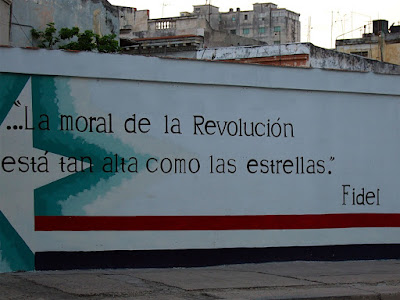
After these it was pretty funny to come back to Moscow and find numerous billboards saying "Putin's plan – victory of Russia" all around the place. There was something very familiar about them.
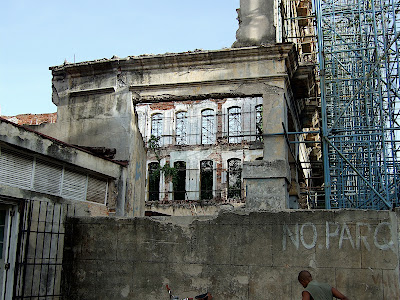
You'll never guess what's that building for:
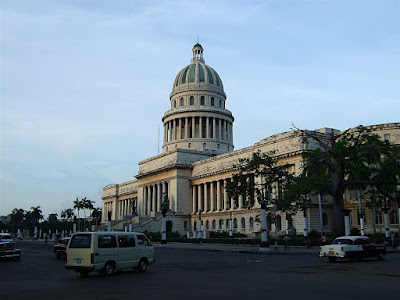
It's an internet cafe. Lucky for us: you don't see much internet in Cuba.
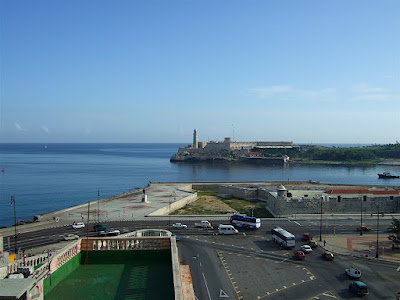
So after one day in the Old Havana we started to appreciate our casa – compared to the condition of the whole city. Not to mention a wonderful view from the balcony:

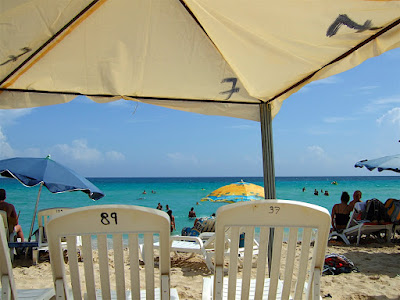
On our second day we moved to another casa in the same building (the first one was reserved) and went to Playas del Este: we definitely needed some time on the beach before we could move on.

After the beach we had a walk around the city looking for a Viazul bus station.
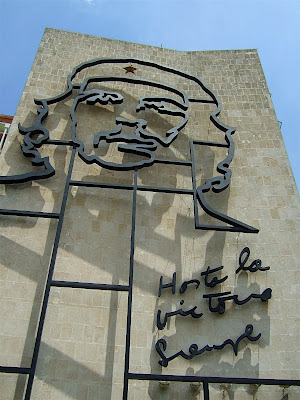
Ministry of Defence or something
We booked a bus to Varadero for tomorrow and went back home.
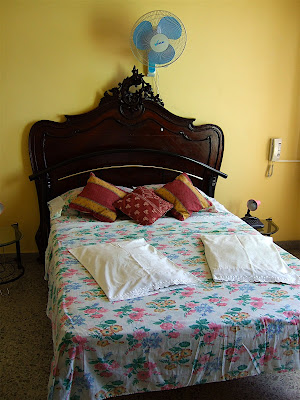
Bed #2

Next day we had some time before the bus, so we went to see some historical sites and museums.
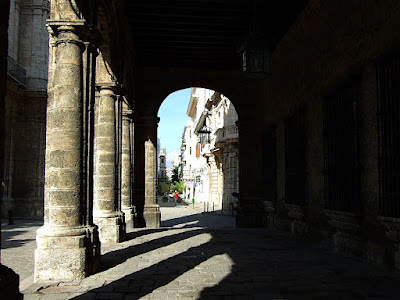
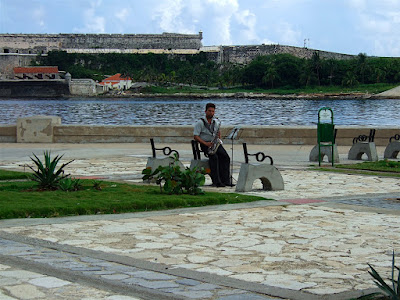
The museum of the revolution is fun. It's full of 50-years-old artifacts and models of 100-people-battles. Plus some propaganda about health, education and CIA agents.
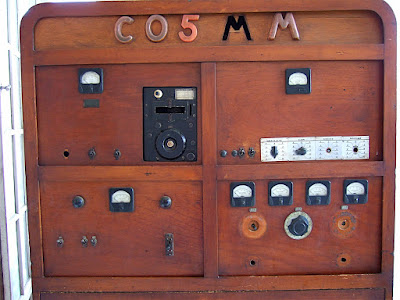
Radio transmitter
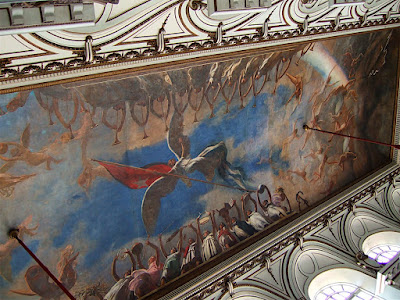
The museum is inside some sort of a palace
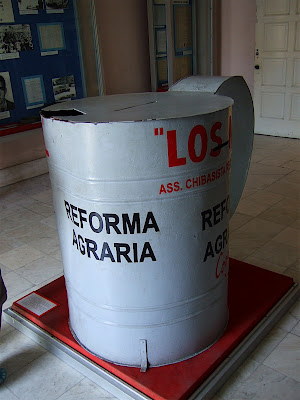
This giant mug was placed on a city square to raise money for the agrarian reform
The second part of the museum is located in the back yard. It's full of historical vehicles like Granma, the yacht that brought Fidel, Che and the other 80 revolutioners to Cuba in 1956.
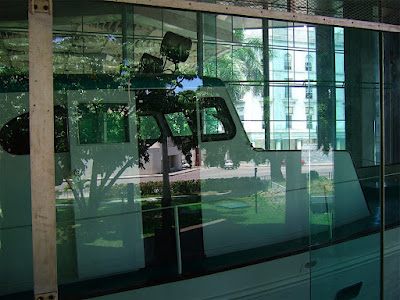
Granma
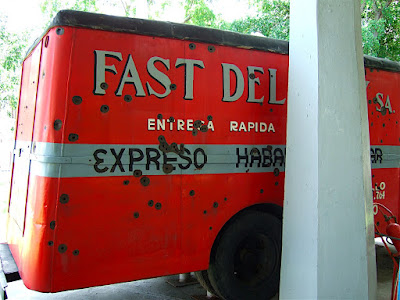
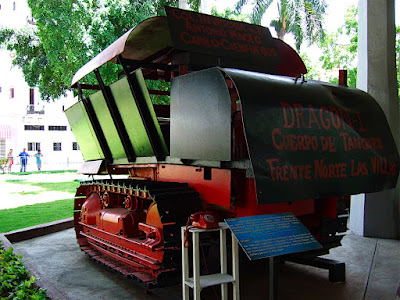
This tractor-tank was made by the workers of some sort of factory
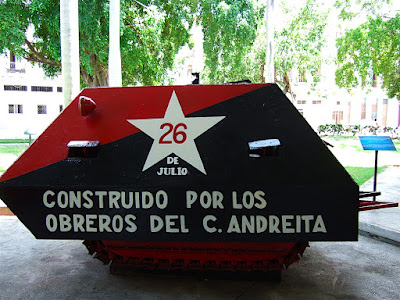
Same with this one, but the fun part is a notice next to it:

These blue notices were written by some dissident, I guess. Check out this one:

After all these museums we finally went to Varadero, a typical all-inclusive resort which seems to be quite popular among the Canadian and European tourists. White sand, blue ocean, coconuts falling on your head and no real Cuba around you. We checked out all the Varadero hotels on cubahotelreservation.com, selected some places we like, came there in the evening and found out that if you don't book a hotel beforehand, you have to pay twice the normal price. This was pretty shocking, so we took a taxi to the only bed-and-breakfast hotel in town and spent a night there. The only good thing about that hotel was a nice view from the window:
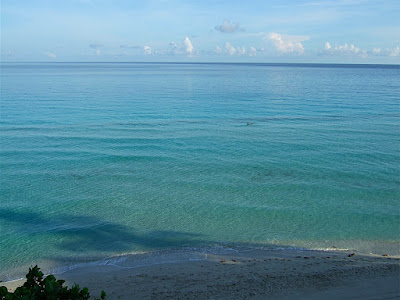
Next morning we decided that twice the normal price is not that bad after all, and moved back to Brisas del Caribe.
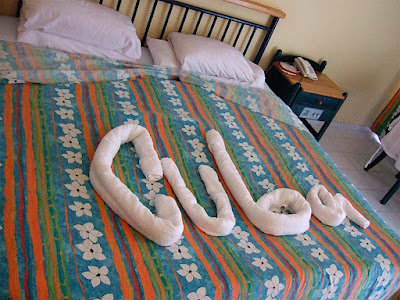
Bed #4 (bed #3 was too scary to publish)
All-inclusive is boring, but the beach was nice, we finally had an opportunity to relax, I learned how to swim (yes, shame on me, I didn't know how to swim before I got married) and we learned how to open coconuts:
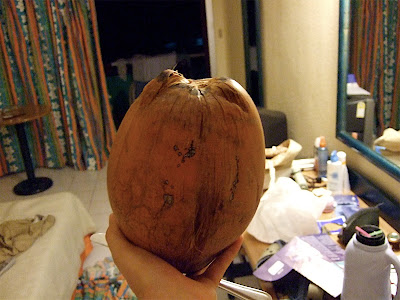
The coconuts were falling from the palm trees all the time, so we picked one up and decided to open it.

We had to steal a knife from the restaurant to get rid of the husk
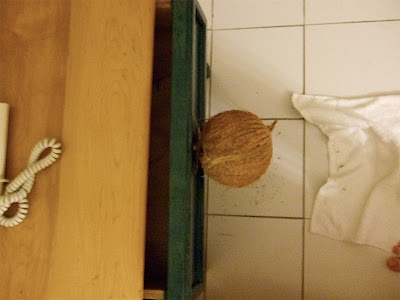
Some more random tools…
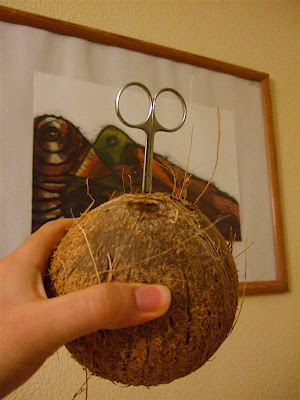
…and we got milk!
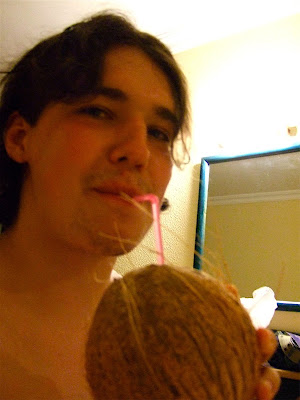
Cracking it open was easier.

Anyway, after four days of all-inclusive we got really bored, took a car and went west.

Hyundai Atos
We took the cheapest car from the car rental, but still it was good enough to make 140 on a highway, which is pretty much impossible for most vehicles in Cuba.
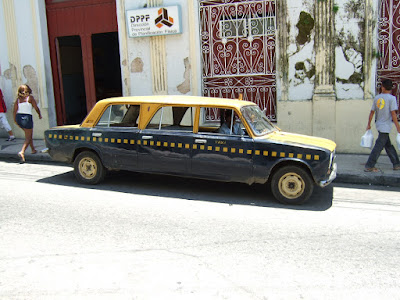
Our first stop was in Matanzas, where we had lunch, met a crazy human rights watch activist and finally managed to take a photo of a limo made of several VAZ-2101:
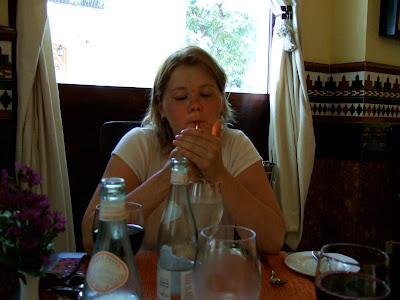
100 km more and another lunch in Havana, in the Saratoga hotel where we used to have breakfasts:
And after that we finally moved west, planning to find a casa in Mariel or to reach Las Terrazas before dark. We found Mariel unhospitable and a bit creepy, and going west from it we lost our way.

Soon it got dark and we realized that we'd better get back to Havana. We clarified our current location in some motel
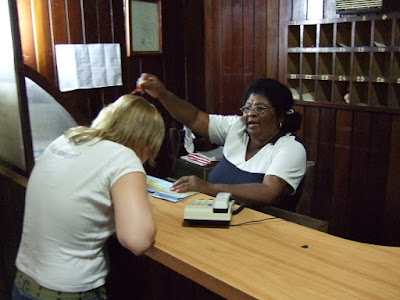
and came back to Prado 20 for another night.
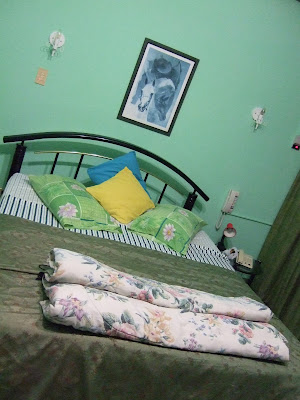
Bed #5
Next morning I went out for a walk to find a more detailed map of the country.
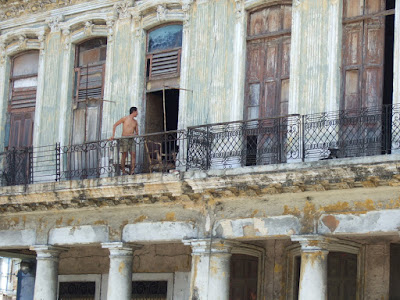
A typical house in Havana
After I got it, we made a second attempt to find a highway going west. When we almost made it to the southern coast, we realized that something went wrong.
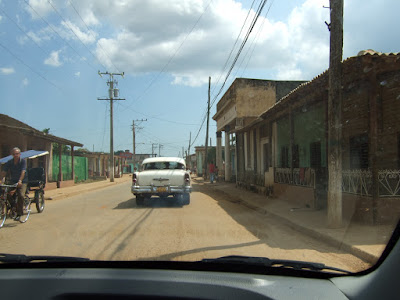
Wild Southwest
The third attempt was successful. We finally came to Las Terrazas, the "ecotourism center" in the mountains.
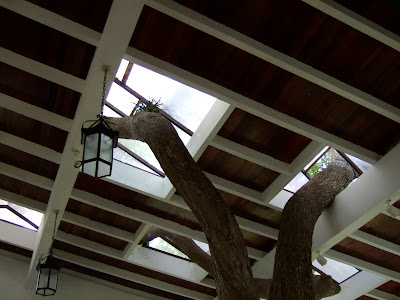
Hotel lobby
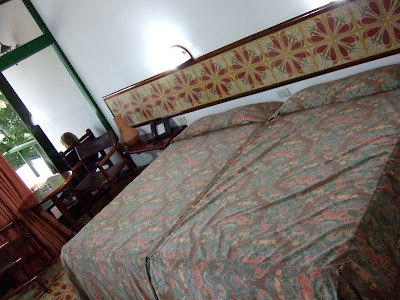
Bed #6
We spent two nights in the Moka hotel – there were plenty of things to see around. First we drove to Soroa to see its orchidarium and waterfall.


We even climbed behind the waterfall, but there was no one ashore to take a photo.
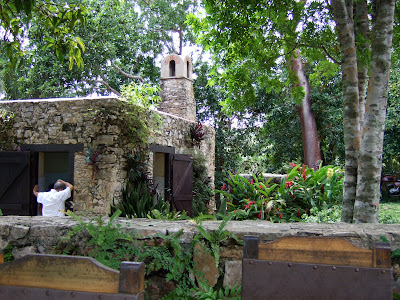
The next stop was Buena Vista restaurant on a former coffee plantation:
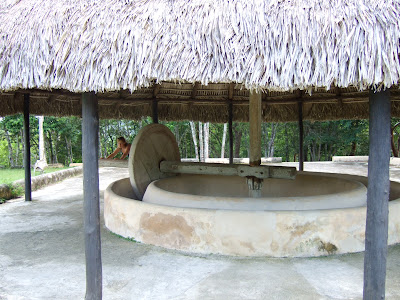
Coffee grinder
And in the evening we went to see Baños de San Juan:
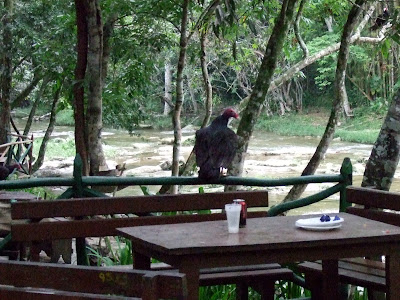
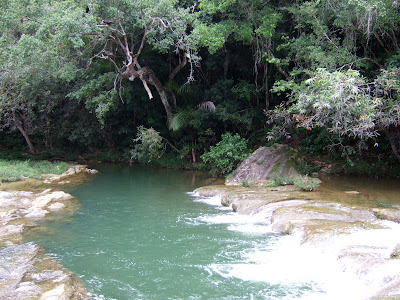
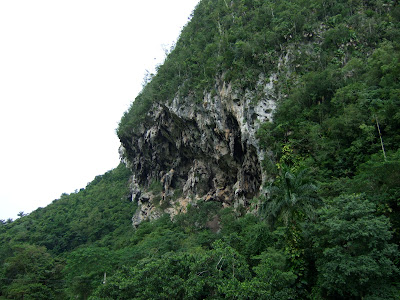
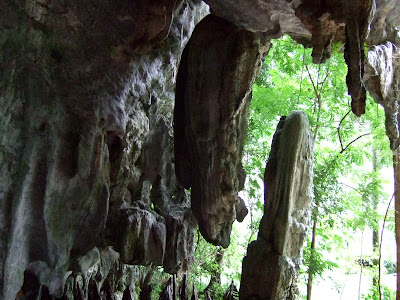
It was nice, but we still wanted to see Guanahacabibes, so after two days we left Las Terrazas and drove west. On our way we visited the valley of Viñales:

This guy sold us some fruits for one convertible peso:

He asked if we are from Czechoslovakia – almost correct. By the way, I always thought that I don't like pineapples, but the pineapples from Viñales were totally different from anything I tasted before.
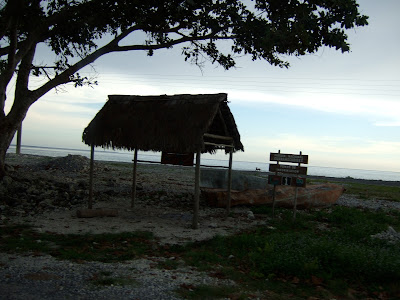
The destination of our journey was the westernmost peninsula of Cuba – an uninhabited biosphere reserve with a single hotel on it, Maria la Gorda. It was a bit risky: the hotel could prove to be uncomfortable, expensive, overbooked, not accepting credit cards – whatever – and we would have no choice but to stay there. Luckily, the place was the best on Cuba and we enjoyed it for the rest of our vacation, leaving one day to drive back to Havana.

Bed #7
Generally it looked like inside some Disney's cartoon like “The little Mermaid”. You walk along the beach, approach some seashell – it develops tentacles and runs away. Yulia took her first diving lesson, and I only did some snorkeling. The fish and the reefs are really cool.

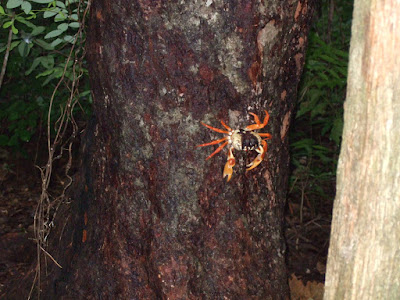
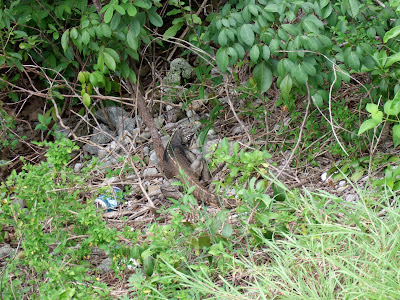
Walking and driving around is amazing: you see all sorts of crabs, iguanas, deer, wild pigs and bulls, crazy birds…

The small white meditating birds are the best. Most of the time they stand still and don't give a fuck about anything.
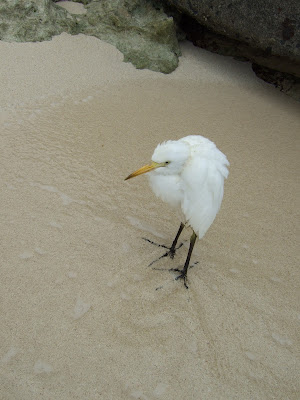
When we saw the first white bird meditating on the sea, we thought that it must be sick or something, but after we saw several white birds meditating on wild bulls, we realized that it's normal for them.
The Guanahacabibes peninsula was amazing, but eventually we had to come back to Havana, find our fourth casa on Prado 20

Bed #8
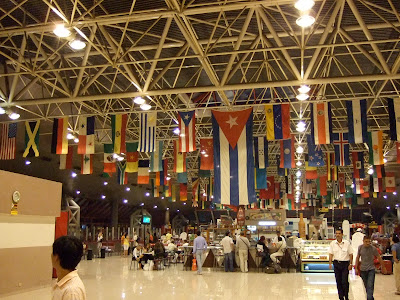
and fly back home. We had another surprise waiting for us at the airport: they didn't let us through the passport control because we didn't pay $50 (in pesos) of airport tax. The ticket didn't include the tax, nobody warned us about it, we had only $30 in cash and all the ATMs or banks in the airport refused to accept cards due to some (permanent) conntectivity problems. Fortunately we had some russian roubles saved for a taxi – we exchanged them with some Russians from our flight and finally went home.
Subscribe to:
Posts (Atom)